Toyota to build Waymo robotaxis for Japan tests in 2027, with UK deployment to follow
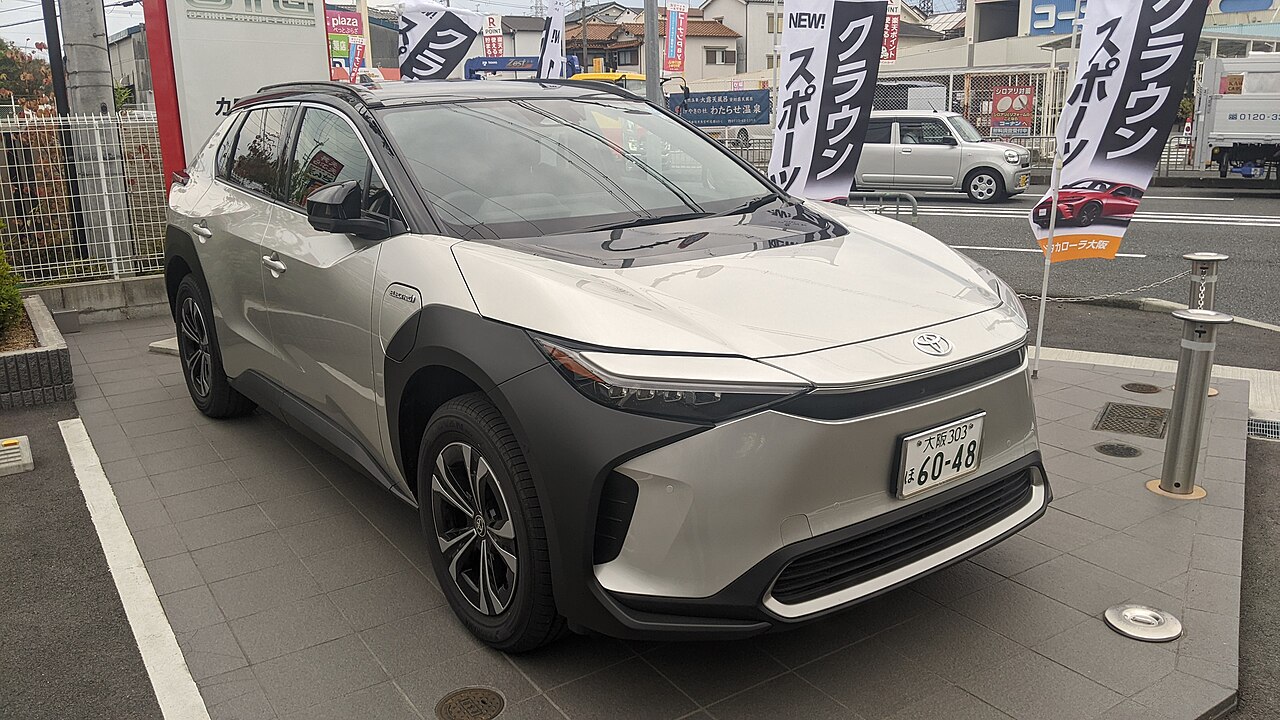
Toyota bZ4X, 2023; ordinary car, not a robotaxi. (Illustrative.) | Mr.ちゅらさん | CC BY-SA 4.0 | https://commons.wikimedia.org/w/index.php?curid=139224750 | https://creativecommons.org/licenses/by-sa/4.0/
Toyota will build autonomous bZ4X vehicles for Waymo, with testing in Japan planned for 2027 and deployment in Britain envisaged in subsequent years. The companies announced the next phase of their partnership on 30 October, turning an exploratory agreement into a programme with a named vehicle, manufacturing site and initial testing timetable.
The vehicles will be assembled at Toyota’s Takaoka plant in Toyota City, where Waymo’s self-driving hardware will also be installed. The joint announcement describes a single factory process covering both the underlying car and its autonomous equipment, alongside a cabin designed for passengers using a ride-hailing service.
Japan first, with Britain on the roadmap
Reuters reported that Waymo co-chief executive Dmitri Dolgov identified Japan and the UK as the initial right-hand-drive markets. He said the companies wanted the partnership to extend further, but had no additional countries, dates or detailed plans to disclose. Toyota executive Hiroki Nakajima said the manufacturer wanted to gain experience in Japan before pursuing wider opportunities.
Important details remain open. The companies did not disclose how many bZ4Xs would enter the initial fleet or where in Japan they would operate, according to Reuters. Nakajima said the first operations would involve a small number of vehicles. Dolgov also said Waymo’s planned 2027 Japanese pilot using Jaguar I-Pace vehicles remained in place.
For British readers, the announcement establishes a future supply route for Toyota-based robotaxis, but leaves the date of their arrival unresolved. For US readers, the initial market sequence does not include a dated American rollout of this vehicle. The announcement therefore has a narrower immediate scope than a worldwide commercial launch.
What the passenger vehicle will include
Toyota and Waymo say the customised bZ4X will have generous rear legroom, automatic doors, a powered tailgate and ambient lighting. Those features are intended to make boarding and leaving easier. They are planned characteristics of the fleet vehicle; the announcement does not provide passenger fares or a booking date.
TechCrunch characterised the arrangement as a regional vehicle-supply deal, while noting the wider partnership remains exploratory.
An agreement that began in 2025
The original agreement was announced on 29 April 2025. At that stage, Toyota and Waymo said they would explore a new autonomous vehicle platform and examine how Waymo’s technology could be combined with Toyota’s vehicle expertise in privately owned cars. Woven by Toyota was identified as a participant bringing software and mobility capabilities.
That earlier statement deliberately left the scope subject to continuing discussions. The new announcement gives the fleet work a more concrete form: the bZ4X, Takaoka and a Japanese test phase. The private-car ambition remains an area of exploration, with no consumer product or release timetable attached to it.
Research beyond the robotaxi fleet
Woven by Toyota’s accompanying statement says the partners will also consider how information from Waymo’s real-world operations could improve safety for other road users. Separately, Woven is studying connections between Toyota vehicles and surrounding road infrastructure, with the aim of improving traffic flow and mobility.
Woven says those efforts could eventually complement both fully autonomous fleets and vehicles with partial automation. These are research goals, rather than announced features available to a buyer today. Its statement also explicitly separates initial operations from the commercial service expected to follow.
The next concrete milestone is therefore the Japanese testing and validation programme. Britain is part of the intended expansion, but the announcement leaves the scale, locations and passenger launch timetable for later decisions. Those details will determine when the manufacturing partnership becomes a service people can actually use.